Monday, February 15, 2021

ख्वाब..

ख्वाबों के ख्वाब

क्या किसीने कभी ख्वाब देखने का
ख्वाब देखा है?
जब ख्वाब ही अपने नहीं होते हैं
तो ख्वाबों के ख्वाब कैसे अपने होंगे
बेहतर हो कि ना कोई ख्वाब देखें 
ना ख्वाबों के ख्वाब
ताकि ना आप रुसवा हों 
और ना ही आपके ख्वाब।

पर ख्वाब क्या सच्चाई से परे होते है?
अगर नहीं तो फिर आओ 
ख्वाब देखें और उन्हें 
सच्चाई में तब्दील करें।

प्रदीप/फरवरी १५, २०२१.

Touring Talkies.

When Shailendra wrote "mere man ki ganga aur there man ki jamna ja.." in 1964 for Raj Kapoor, Vyjayanthimala starter Sangam, also directed by Raj Kapoor little did he know that people will take another meaning of these lines like they were used to, for Dada Kondke lyrics. This depended on the people who wanted to use a different meaning out of just about any song or sentence. But that apart when released the film was a superhit. Unlike these days over 56 years back the movie would be first released in a few metropolitan cities like Bombay and Delhi as initially only few prints would be made and depending on the response more prints of the film would be developed and sent out to across the country for release. Raj Kapoor indeed was a big name in the industry so it was unlikely that the film will not be a hit. It was a silver jubilee movie(running for 25 weeks for all four shows in a theatre) and later became a golden jubilee ( 50 weeks non stop) superhit. Distributors will charge theatres who want to run the movie in their cinema halls depending on these ratings and also on the star cast. Everything was perfect for Sangam, a hit star cast, director, lyricist, music by Shankar Jaikishan and singers like Mohd Rafi, Lata Mangeshkar. So obviously theatre owners had to shell out quite some money and commit rent for at least 4 weeks if not more and their investments in such movies always resulted in big profits through ticket sales that often attracted black marketed tickets that they themselves will control .. not sure if current generation is aware of this but back then for popular movies, outside the cinema halls counter sale will open for 5 or 10 minutes and the counter will show a board "Sold". But out side the ticket counter you could buy tickets from people with a handkerchief tied to their neck and with one or two open buttoned shirts, shouting " balcony ka10 waala 25 men" " stall Ka 5 waala 10 men" and so on. People would be happy even if they got at that price. For hit movies even cops would make a lot, either by snatching tickets from these agents or by the money offered by these black marketeers. First day, first show on the movies released usually on Fridays would command double that price at times, so movie watching on Friday 1st show was reserved for rich people or very keen enthusiasts only. 

In Betma, however, there were no permanent theatres. During the holiday season when schools were shut some men will set up a "Touring Talkies". These were like circuses of those days. On an empty patch of land when there is still time for sowing new crop they would the place on rent and cover all four sides using temporary tents with open roof and small opening for people to enter by showing their tickets to the gatekeeper. Inside the "hall" at the back there would be some 5 rows of 20 seats of folding chairs each and in the ground ahead till the screen some 200 people could sit on the leveled ground. Most people entered through the gates but some smart ones usually kids, would also sneak in crawling but when caught they faced canning by green freshly plucked sticks and were thrown out. Tickets were not priced like those in the cities and often times it would be for 50 Paise and Re 1.00 except for popular movies for which it would be double that amount. Since movie could run only when it got dark there would be only two shows and sometimes just one depending on the response from audience. There would be full house on the weekly bazaar (called haat) days and not so on regular weekdays. The publicity would be through posters put at various places as well as through a tanga moving around that was covered with posters and one or two people shouting over public address system. Usually the tanga would run through the village and sometimes also in the small nearby villages from where people came on weekly bazaar days for their household purchase including some vendors who came to sell their wares. Since it would be crowded on bazaar days with no place for tanga to go through, you may also find someone with a battery operated PAS or just a small "bhopu" (conical footlong equipment) made by an ironsmith shouting loudly. Usually with a small movie poster hanging over his neck. 

The screen would often be a clean white cloth and the 16 mm mobile "RCA/Photophone" projector that had option to run on battery would be the only hardware needed to project the movie. Since Betma was just electrified there was a provision for running the projector on electricity as well.


In the autumn of 1967 owners of Touring Talkies got lot of request for movie Sangam that was released three years back and had made headlines and ran in Indore ( some 14 miles away) nearly a year ago. The owner considered it but the rent was pretty steep and a lot required as deposit to be paid in advance to distributors. That could have given profits but it was also risky. So he came out with an idea and announced the date of Sangam with grand publicity. 

Come the evening with first show of Sangam in Betma and one could see the soaring crowd from at least a mile if not more. Tickets were three times the normal price i.e. Rs 1.50 and Rs 3.00 respectively for stall and balcony (as some would call it) and learning from city cinema goers the owner also resorted to black marketing to make a little more. Soon the show started at the sunset and people were so happy to see Raj Kapoor singing on screen the songs in the voice of playback hero Mohd Rafi but they could not identify Vyjayanthimala as female artist who was also singing on screen songs sung by Lata Mangeshkar. At interval the food hawkers outside also made a killing as they never saw such a crowd earlier. But the crowd was confused although they saw songs like "main ka karoon raam mujhko buddha mil gaya" and "ye mera prem patra padh kar". But something was amiss and they couldn't figure out what. 

Soon after the interval the most popular song " mere man ki ganga aur tere man ki jamna" came on the speakers but long before the song got over, Raj Kapoor was having some dialogue with the heroine. That was the time when cine-goers realised that they were taken for a ride and that they were fooled by showing some other movie also whenever the song time came Sangam songs were played making movie audio silent. Soon after that there were riots and stampede and spectators made a havoc, broke the chairs and tore off the tent and the screen. Such was a chaos that police was called to restore the situation. After pocketing substantial money from owner they shoo away the crowd. No one was given any refund. It was such a disaster that the Touring Talkies had to run away overnight and was never seen again in Betma.

What had happened was that owner got a "brilliant" brain wave when he saw the demand and instead of  Raj Kapoor - Vyjayanthimala colour movie SANGAM (1964) he hired Raj Kapoor-Rehana starrer SARGAM (a 1950 black and white movie) Raj Kapoor was a bigger star who was seen on the screen and people thought may be Vyjayanthimala looked different in the movie with the make-up. They enjoyed all the songs till interval although the sequencing was changed and the operator kept the most famous "mere man ki ganga.." for post interval.

This smartness ruined the Touring Talkies owner but still makes me laugh whenever I remember the incidence.

Sunday, February 14, 2021

Child entrepreneur.

This must have been around the same time around 1966-67 when the Loban venture was encouraging and profit making. During Diwali time I observed people would be buying lots of things for household for the celebrations. Diwali was  and is indeed the biggest festival that we celebrate here in India and this has been such since time immemorial. So I am sure not just in 20th century but also in preceding time in 15th or 10th or 5th century or even before this was celebrated with the same fervour.. with gay and gaiety. 

Shops will be decked up with novelty that would be released by manufacturers to attract more and more customers and even when they had similar items at home just to tweak the design here and there to attract people into buying. Be it some utensils or glassware or decorative pieces or firecrackers or what you may have there. People also want to be well stocked for food items with spices and grains that they usually don't keep but for festivities they would be using them for making savories and sweets.

The weekly markets would be larger than the usual with more vendors and more items and noise levels will go multifold. In those days we used to enjoy such noise and often mimic it then or later and laugh. My father had taken a loan and bought a running flourmill from someone to add some extra income as it was hard for him to meet up with expenses of family of 7 (including our ageing grandfather, Baa). 

Baa was well respected in the village where he spent all his life and during his work life he was engaged in Holkar State service as Patwari, a revenue officer. This was a very important position as even today a revenue officer would have. He would know everyone who has some land, big or small and everyone would know him. Actually, more people would know him than he would know people. As Patwari he would have control over the land of several villages in the vicinity for any kind of transaction: sale, purchase, transfer etc. I am sure he commanded great respect being upright. He was also very kind and helpful to people extending moral as well as monetary support to poor and needy , especially farmers. That left him penniless after retirement. So we didn't have much to spend or got anything in inheritance but respect from people and his values. He had some small savings with which he had purchased a small piece of land but being a revenue office he thought it inappropriate to have it in his name and had given it to his younger brother hoping he would have it back when he retires ..that obviously didn't happen. He must have had little pension from the state that was perhaps sufficient for his own sustenance. 

He was happiest when my father opted for a transfer and managed to have a posting in Sanawda as a sole teacher of primary school near Betma. In those days inter-district transfers were very difficult and he had to request senior divisional education officers on compassionate grounds for a transfer. Even to reach out to such authorities was tough so I suppose he approached one of his uncles who was a headmaster in a school and a very respected teacher, a social worker and a homeopath doctor who studied homeopathy on his own and used to run a charitable clinic with his own money, outside school timings to serve people. He was very popular not just in his town Badnawar that was a tehsil of Dhar District, but also in and around Indore Division. For his teaching services he was also awarded a Rashtrapati Puraskaar (President's Medal) in the late sixties. We will talk later about him.

I think the amount was Rs 4000 for which my father purchased the flour mill with earning potential of Rs 200 per month after cutting all expenses including salary of one operator, electricity and Rs 10 per month rent of the place. It was a nice and open place from front and behind with a room size of some 20' X 40' and a platform of  20'x10' in front and some space at the back. On one side of the aata-chakki ( as flourmill are called) was Pehlwan Amarsingh's house that had some 10-12 milk giving buffaloes tied all the time except during the day and on the other was a shop cum residence of a barber. The road outside was also wide by village standards which can allow two bullock carts to pass at the same time. This place was between our home and the bus stand each about 300 meters away due to that there was lot of movement and even if there were no customers, you won't get bored sitting or just being there. This venture of my father was called "Tribandhu Flour Mill (three brothers' Aata Chakki)". There are more stories associated with this place that we will keep for later. 

For now, I observed during the weekly market that during the Diwali time other then the regular vendors some new vendors would also sprung up with "seasonal" items. One such item that came to my attention was the picture of Ma Laxmi flanked by ma Sarawati on one side and Lord Ganesh on the other. There were different sizes of pictures of the same deity. I also observed that everyone who came to the weekly market bought at least one new picture (paana) although they may be having an old one from the previous years. Some would be framed in fancy frames and some others loose. Majority of the pictures that for sold were loose printed on shiny papers of 4"x6" or 6"x8 and some 12"x15" as well. I quickly did some calculations and with some money left in my piggy bank I told a friend's father who used to go to Indore for his shop's stock replenishments to get me an assortment of ma laxmiji's printed pictures.. ( Laxmi ji ke paane). Having got them I first put a nice display on the chabootara /platform outside the Chakki but found that the off take was very low so the next week I made a mobile shop and made a cardboard display that I could carry in my small hands with some thread strings attached so that the "paane" don't get slipped.. I had to practice it hard and the week after, when the weekly market started buzzing with activities I started roaming through the place from one end to another it would be about 300 meters with several ( 2 or 3) rows in between. In about 3 to 4 hours I sold some 300+ pictures of various sizes. Overall a 15 day business would have rendered me a profit of Rs 30 or more. Rs 10 on each market days and Rs 10 or so on all other days. 

So I had diversified my business and with some innovation managed to remain in business for both Loban and Laxmi ji ke Panne for the next three years. In my last year in Betma I was in class 10th that used to be high school board exam so I gave up my business for other young and budding entrepreneurs.

Picture of one of those paanas that is still with us.


Early Entrepreneur.

Quoting Merriam Webster dictionary: Tazia is a replica of the tomb of Husain, the martyred grandson of Muhammad, that is carried in processions during the Shi'ite festival of Muharram. 

Muharram used to be a big festival for me as well. Being a born non-sectarian, that I continue to be, I have been celebrating all the festivals of any religion, as they come. As under 10 year old child, I knew the celebration part but not the history of it. I also used to wonder about the rigour with which those ahead of the procession would dance and inflict wounds upon themselves as part of the three day long festival (later learnt, it was mourning). The Mehdi ki Raat, the Katl ki Raat and the final day of Tazia processions. The first two I looked at carefully and understood much later during my final years of school. But at the onset of this story I used to be excited with the final day procession that would pass through Betma and finally all the fancy, well decorated tableau some having larger than life white horses would rest at Karbala and huge crowd would gather around to have a thorough look at them and also discuss amongst themselves and rank them, not sure if anyone would ask them to vote to decide which tableau was the best. The place will be filled with people of all religion not just Shi'a Muslims who would come from nearby villages on bullock carts, bicycles and also on foot ..men, women and children. Some in their burqas too. Although this was a festival of mourning it was this also a Mela and people would come to enjoy the day in the best of their clothes for the occasion. As a token, at the end of the day a small replica of Tazia would get immersed in the river flowing nearby (the same river that would have Damu's panwari a little further near it's banks). In a way there were similarity in excitement and celebrations to the Anant Chaudas for us kids.. in tableau, in vendors selling goodies in the noise around etc. etc. Children don't care why it is observed/celebrated they just need reason to feel happy.


Much later, even today I don't understand as to why some people want to disturb this happiness of children and some others. I now learnt that Muharram is a Shi'a festival who are different from Sunnis in their belief about who is/was true follower of Prophet Hazrat Mohammad. But back then they I hardly cared the reason for celebrations/ festivities.

I must have been 8 or 9 when I first noticed this festival and went out on my own to have fun in the Mela. Over there I saw that some people would buy a small packet that would fit into your palm, wrapped in some paper and put out all its content in front of a Tazia into a small pot with fire burning in it and there would be sudden change in aroma of the air, it would be full of lovely almost intoxicating fragrance. Through an enquiry I learnt that the stuff packed in those packet was called LOBAN ( a resin also called gum Benzoin) and it's a kind of material similar to guggal dhoop that enhances the fragrance once put to the holy fire that burns before the Tazia. Then I recollected that this is the same fragrance that you smell when some nomadic wandering fakirs with something in their hand, when they ask for alms they would put loban into the small fire they carry to fumigate surroundings with aroma. Loban is also used in incense sticks for wonderful fragrance and also has its use in aromatherapy. Further enquiries revealed that with  one kg of Loban resin you could make 200 packets and each packet gets sold for 5 paisa. Meaning you could collect Rs 10 if you sold 1Kg that otherwise would cost you Rs 5.00. The idea of making some profits for engrained into me and a few weeks before the next Muharram I bought 1kg of Loban and made 200 small packets wrapped in papers. Luckily no one at home noticed or objected since I used my "own" money and didn't ask for any help. 

Come the day and my excitement was at its peak, much more than precious years. I took a small home-stitched cotton shoulder bag and put all 200 packets carefully in it and started my entrepreneurial journey wearing a deep pocket knicker to keep the change and ensured it is not torn. At the Karbala ground the crowd had started gathering and people were offering loban to the small fire put in front of those tableaus. I began by shouting " Loban le lo, Loban le lo", 5 Paise ki pudia.. 5 Paise ki. " When people saw a young boy selling more quantity of Loban than other vendors they crowded around and within an hour or so, my stock vanished after shifting my place from one Tazia to another when I saw the crowd thinning around.

I was very happy with my venture and was on the top of the world having collected Rs 10.00 of which I made a profit of Rs 5.00.


Saturday, February 13, 2021

Shradh Paksh - Betma days

Two days after Anant Chatursashi another festivity starts for a fortnight this is called Shradh Paksh from a day after full moon until the new moon day. It is considered auspicious for remembering your ancestors who departed and to get their blessings. You celebrate or observe the day of their departure as per Hindu day called tithi that falls between 1st and 15th, the new moon cycle (krishna paksh). It is believed that when you remember your ancestors these days and pray for them and offer food and seek blessings of brahmins and also offer food to crows who take the food directly to your ancestors in the heaven and you are blessed. Since there are only 15 days in the calendar it is ensured that your ancestors must have departed on one of those days, you may not, however, remember the exact day of many of your ancestors beyond one or two generations so you pray for all the undated departed ancestors on day 15, the new moon day, also called Sarvpitr amavasya. That's the grand finale of the fortnight when you pray for everyone in your ancestry. You do not start any new work till everyone of your ancestors has blessed you, so you won't buy or start any new venture during this fortnight and do the same a day after, in the next fortnight with vengeance for all your accumulated desires that you have been holding for two weeks and there starts another series of festivities to begin with navratri ( 9 nights of praying Durga with her various names like Kali, Annapurna etc.).

Coming back to Shradh Paksh, Brahmins would suddenly become far and few in those days as everyone in Betma would seek their blessings by offering food during these days. All three of us brothers would get invitations in advance for giving "blessings" to our jajmaans (host). Usually, all three of us will go to the same houses but on "popular days" when too many ancestors have departed or on Sarvpitr amavasya we would go separately. Those days and even now in villages the houses were built based on the communities so you would have a Rajput mohalla, a kaachhi mohalla, different harijan ( in those days they were called by a different name which is now termed illegal) mohalla etc. etc. Others would be spread across the village. There were a bunch of Bania families in our neighborhood and we would get "booked" for different dates to "bless" them by accepting invitations. Except on the days when we would seek blessings of our own ancestors those days lunch will be prepared only for grandpa/ baa, (In Maharashtra, MP and other Hindi speaking belt Ba or Baa is a term used to address elderly male, usually grandfathers with respect, however, in gujarati culture baa is used for mothers and grandmothers), parents and my sister as traditionally girls were not considered for seeking blessings. It was a big fortnight long food festivals. The usual preparation those days would be halwa, poorie, kheer, raita, papad and some seasonal vegetables. We would get formal invitation and a reminder in the morning and would have a proper and long bath and dress up for the occasion and leave home to bless the families of our jajmaans. We would be offered a clean dhurrie to sit on the floor and a four inch high patla/chowki (a stool) where a large brass thali( plate) would be placed with two or three katoris (bowls) along with a brass glass of drinking water. As such the whole host family would gather around and pray with folded hands and request us to have our food but since all fifteen days they can't shut their shops so sometime they would take turns and male members would just show their faces and go back to attend to their shops ( most of our hosts had either a grocery or a grain shop (आ ढ त की दुकान). Although we were kids but growing up kids eat as much as adults and specially if these are meals in a Bania household and that too special ones for the occasion, you would start eating only after you have taken a small portion of every offering and place it in one corner and took some water in your palm and put it around your plate as an anjali , that is a prayer to God whom you offer the food, prayed lord , before you start eating. The feast would go on for half an hour, and the last of the house and other ladies would not let you finish till you are full to the brink of bursting and almost overflowing with the food and burped. You will be offered a hand wash while you are still sitting and a clean towel be given to wash hands and mouth. Once finished the host will put a tilak on your forehead and offer you a rupee coin as dakshina. A rupee was lot of money in mid sixties that could fetch you an equivalent to 20 "amma-ke-bade" or more. More than the food we would look forward to this happiest ending. As we never got any pocket money ( we were told that we don't need any money on us and all our "needs and demands" will get fulfilled when asked for, the fact was that, that never happened). We felt like VIPs in those fifteen days.

This trend reduced a lot as we reached our adolescent age and later also when we moved to a large city Indore, where we knew only few people who were  far and spread across the city. However, I had couple of Bania friends in my class in the final year of school and their families would insist on following the same, so the feasting continued for some more years.

Oh! How much I miss those feasts and godly importance of having born in a brahmin family.

(Representative picture downloaded from Internet).

Tuesday, February 9, 2021

Sanawda - a small village

Sanawda was a tiny village in Betma's neighbourhood, I have no idea how small but in those days I had not seen a village smaller than this. May not have more than 100 houses with no other government institution other than a primary school. That had just one teacher and perhaps 40 or 50 students comprising of all classes from 1st to 5th. My father was transferred from another village called Kanvan that was nearly 50 kilometers from Betma. He sought this transfer to attend to his father who had retired from the Holkar State service some 20 years back and used to live all alone since Dadi, like my Nani, lived in god's abode. None of us, me and my siblings, her grandchildren saw them. I am sure it must have been tough for Dadaji to live alone since Dadi departed. When father for transferred to Sanawda, Dadaji must have reached 75 but he was hale and hearty and used to manage his own chores. However, I don't remember us spending much time with him before we moved to Betma the nearest "connected" village from Sanawda with some basic facilities for transport, civil dispensary, police station, higher secondary school, shops for daily needs, cloth merchants, pharmacy, jewelers etc., reason being whenever we had long vacations we would go to Nani's. Bua and her children may have been coming to live with Dadaji during summer vacation but our cousins and his grandchildren were much older than us so I suppose they also may have stopped coming there few years back.

When we moved to Betma in 1964, there was no electricity in the village, it had been sanctioned and work was in progress to install street lights and some well to do people were preparing to wire up their houses to get connections when the wires got energised, that must have happened in the year that followed. When the rush was over we also got our connection in the house and were very excited and thanked Thomas Alva Edison ( though name to this godly person was known to me much later). Ghamu Da was quite enterprising and seeing the opportunity he trained himself as to how to do wiring and used to wire up houses with the help of Damu and some other people he kept on temporary rolls. There were two types of wiring, one was open and another was concealed. In the close wiring you would use an inch wide wooden cover and hide the wires beneath, it that had another wooden piece of the same width nailed to the wall. The open wiring had half an inch wide single piece of wood and wires would be placed on it using metal clips. I knew all this because like helping them sell tea and cold drinks at bus stand I also used to watch them do wiring installation work and give them nails, wires etc. when they stood on stools or ladders to fix wooden strips that would conceal or just be a base for wires.

Till mid -1966 we used to study under the lalten ( lantern) that consumed kerosene that was called ghaslet then, like you see in the old Hindi movies. We couldn't go out and sit under street lamps as also shown in those movies since there were no electrified street lamps and I don't remember any kind of street lamps lit by any alternative mode at all in the village. One could barely see while walking on the roads after it got dark by using a torch or often a lalten. Should you have neither you need to be careful and make do with little light coming from people's homes. By then I had graduated from primary school and had joined or would be joining the middle school that was on the main highway just before the bus stand, unlike the primary that was in the heart of the village.

Those days a teacher in villages was literally worshiped unlike how we see them today. A school teacher called Maad sa'ab( crude/corrupted word for Master sa'ab). Smaller the village lesser you found educated people who could even read or write and generally you would find the children studying in schools are the first generation learners. So maad sa'ab would do many things besides  just teaching.. like reading the letters received or writing the letters they wanted to send. People will look up to maad sa'ab for getting current affairs news of kasba, tehsil, district, state and the world. Maad sa'ab would also be teaching them moral values and unless you are a crooked person you would listen to him intently and follow what he said. Maad sa'ab's family would also be kept in high esteem and people would jump at any opportunity to host them. 

Those were the days when father didn't even have a bicycle and would walk some 1 to 1 1/2 Kos ( 3-4 Kms) each way to  school. A Kos was a unit of distance that was equal to 2 miles. There was no motorable road from Betma to Sanawda and the only relief to your feet at times was when a bullock cart was going your way. In monsoon the road will be muddy and under the water at times cutting off the destination and villages on the way. So during monsoon half the time the school would be closed or when in school, father would stay with someone in the village if it was impossible to walk back. During the harvesting season be it in winters when it was time for rabi crops like wheat or chana or the summer crop like maize, jowar, baajra etc. Sugarcane is one crop that would come in any season.. it is sown in three seasons and it takes nearly 18 months, so people used to sow it in different seasons but in those days we saw the crop maturing during monsoon, same time as maize and jawar. We never saw soya or even paddy.. soya was a new word in the country ( at least for me). Malwa was not right place for paddy.. first time I saw paddy field may have been in my twenties or so. Malwa is also known to be very fertile with its black soil. For our entire childhood we didn't know of any other colour of soil and only other soil we used to see was a  beige colour soil that was used for washing hair before mother (and other women) applied amla sikakai. There was no concept of what we call shampoo now. We would be treated with fresh crop produce in the fields be it green wheat (umbi) or green gram (chhod) in winters and makka (maize) bhuttas freshly roasted over dried branches available in the field. It used to so tasty and the process especially that of removing jawar pearls from the bhutta/cob was fascinating. 

Sugarcane/eikh/ganna was also grown in abundance in between the fields that had maize or jawar during monsoon crop. Since there was no sugar-mill in the vicinity most sugarcane growers would use sugarcane juice to make gur ( jaggery). This process was also very fascinating. You would take out juice of sugarcane using a small crusher that would be rotated using oxen sometimes one and some other two. During the season, at least two or three times we would be invited by locals in Sanawda who treated us to start with fresh sugarcane juice filtered and enhanced in the taste by squeezing lemon juice over it. While you drink this, you will be served freshly roasted maize cobs (makke ka bhutta)/ or jowar pearls. Before you finish that, freshly made hot gur/ jaggery will be served to you on a leaf. Gur is made by boiling sugarcane juice in a huge flat metal vessel, it takes 3-4 hours for juice to solidify to become gur and you have to constantly stir the vessel and mix some additives that removes impurity that is taken out constantly. The taste of fresh gur is just wow! something out of this world. As urban dweller it is difficult for you to imagine that until you taste it. 

On one monsoon day when it appeared it won't rain three of us and father walked to Sanawda to be guest of the village head in his farm. We were full to the head and enjoyed ourselves thoroughly with all the savories ( roasted stuff, juice and fresh gur) that it was difficult for us to even get up and walk. When we were leaving for home we were also given a small vessel full of sugarcane juice, besides fresh gur and bhuttas to be taken home for further consumption, especially to have sweet rice cooked in the juice, a delicacy. 

We must have left the village around 4.00pm and started walking home.. half way home it started raining with thunders and then pouring with such intensity that the small metalled/ gravel road was full of water and mud flowing at the bottom and soon the water level was nearly 3 feet as there was nowhere water could flow but on the road. I must have been little over 4 feet at that time. All of us were also carrying something or other given to us by our host and I had the juice in a container carried on my head.  It was tough walking the road and it was getting dark, somehow we reached home and when I handed the juice over to mother for making sugarcane juice rice, she couldn't believe that on such a rainy day, I managed to get it safe.
 Reprentatice pictures downloaded from Internet.

Sunday, February 7, 2021

Anant Chaudas Ki Jhanki


In our childhood schools used to open on July 1st after two months long vacation. As such we didn't have classes after March since April was the month of exams which would invariably get over by middle of the month so as such it was a three month long holiday but since parents had to worry about the results which was the yardstick of your performance through the year and results would be declared on April 30th, the official vacation time was only two months and not three.

Of those two months at least one and half would be spent in nani's house in Dewas and reluctantly we will be back about a week before reopening of the school. That would also mark end of summer as monsoon rains would start in Malwa towards the last week of June. Weather would turn from pleasant to very pleasant although as kids we would never mind any weather. However, sadly the time for aamras, that was part of all our summer meals would be over by then. July would also offer excitement of new class and give feeling of growing up by sitting in a class higher than when schools had shut two months back.  Sometimes there will new faces also joining the class and meeting new friends would have its own excitement. Some teachers would also be new in the new class and we always hoped that they would not be strict and will be good to us. You will have to impress them again to have impression of a good student. Although it was not common but not rare as well when you are asked to leave the class and stand outside.. don't know whether it would be called standing or sitting but the pose you were asked to keep was that of a "murga", right at the entry door of the classroom for the whole class to see.. it would be big distraction for the students sitting in the class that teacher would not notice as all the students will be looking at me and someone else, if I had the luxury of a company in that pose, rather than the blackboard.  As such I was a sincere student and would get punished by someone else's mischief. In the hindsight I think that was a practice that made me do yoga without any pain in later life. 

Savan /Shravan is the month when monsoon will be at its peak and it would usually start in middle of July. Mondays of the month had their own religious importance that we hardly cared but every Savan Monday was a picnic day. There would be four and sometimes five Mondays in Savan ( सावन सोमवार). On these Mondays mother, me, our friends and their mothers would go out to Balaji temple on the outskirts of the village on a potluck picnic. While mothers did Puja in the temple we would be swinging on the rope/ rassi-jhulas that were tied over several pipal and bad (बड़)/banyan trees. Next to the temple was a rivulet that would be flowing with full water during monsoon and when it rained heavy, it would get flooded and the road would go under giving a visual pleasure to villagers ( although commuters will be cursing).. it would be like a Mela in those days when the rivulet overflowed. That phenomenon was called (puer/पूर or flooding). We didn't care whether it rained or not out picnics were always "on" on Savan Somwaars. I am not sure but I think this used to happen outside the school timings or I won't be surprised if we were given short leaves from schools. This was like continuation of our holiday/joy season.


Between July till March, that is almost the full time that school was in session we have one festival or other in India. Rarely a week will pass when there is no festival that we celebrated. Savan will culminate into rakhee and eight days later there would be janamashtmi, 12 days after that would be Ganesh Chaturthi and 10 days later there will Ganapati Visarjan ( Anant Chatursashi/chaudas) and so on and so forth until mid to end March with Holi. From Ganesh Chaturthi to Anant Chatursashi/chaudas all 10 days is a big Ganesh festival across the country especially in Maharashtra and western Madhya Pradesh. ( In those days outside these two states the fervour was not such in other states, thanks to Bollywood that glamourised these festivities and now entire country celebrates these festivals with similar enthusiasm). 

Indian freedom fighter Bal Gangadhar Tilak championed this large scale Ganesh utsav as a means to circumvent the colonial British government ban on Hindu gatherings through its anti-public assembly legislation in 1892. Since then the 10 day festivity culminating into a big procession running through the city marked the end of the festival. Pune was the first city to have these huge processions with tableaus on relevant topics mounted on large vehicles.

Indore adopted this in time immemorial, soon after Pune and no one told me when, but ever since I was remember I had heard about these processions in Indore. Indore was one of the main textile centres of the country. I think it had largest number of textile mills after Ahmedabad and Bombay, unlike Pune that had no textile mill worth mentioning. Every textile mill had its tableaus in these processions and each mill will have about a dozen or more exhibit mounted on different vehicles. Each one will be on some theme or other that would be a message on current social or political subject or statues of several gods and goddesses including Lord Ganesha whose idol will be immersed next morning with loud chants "ganapati bappa moriya" (oh lord! we worship you as our father) in some localities people would add "pudhachya varshi laukar ya" (come soon again next year). The whole city will turn into an exhibition ground and people will queue up on both sides of the route and also on the windows and terraces from 4.00pm onwards that would be not less than 10 kilometer long from start to finish, although the first jhanki/ tableau of Hukumchand Mills will come to Jail Road not earlier than 10.00pm and the last one of Swadeshi Mills between 4.00am and 5.00am depending on how smoothly the procession went. Ahead of every set of tableau there would be a team of dancers, some with lejhims and some other with different kind of bells, dhols and other musical instruments. They will stop at every 300-400 meters and gyrate with full energy. This will allow people to enjoy not just their dances but also look at the tableaus closely.  Entire route will be barricaded with ropes and volunteers of different mohalla committees will be monitoring the discipline of the crowd. This will also be chance for mobile vendors to sell various wares not just food. There would also be some food stalls and other souvenirs in by-lanes. Overall this was a huge festival for Indore city where people would come not just from the city but from nearby villages and towns as far as 60-100 Kilometers with their families especially small children. Usually this day would come in September sometime in the beginning and in some others a bit later in the month depending on hindu calendar. Besides Pune and Indore the only other major city where the entire city would celebrate this immersion is Bombay (now Mumbai). One could always debate whether it started first in Indore or in Bombay to celebrate at such large scale. But Bombay till date doesn't have the tableau procession on this day.. they just have large statues from various festival committees usually crowding around Chaupati where often the crowd will be unmanageable and stampedes would cause accidents, some fatal, every year.


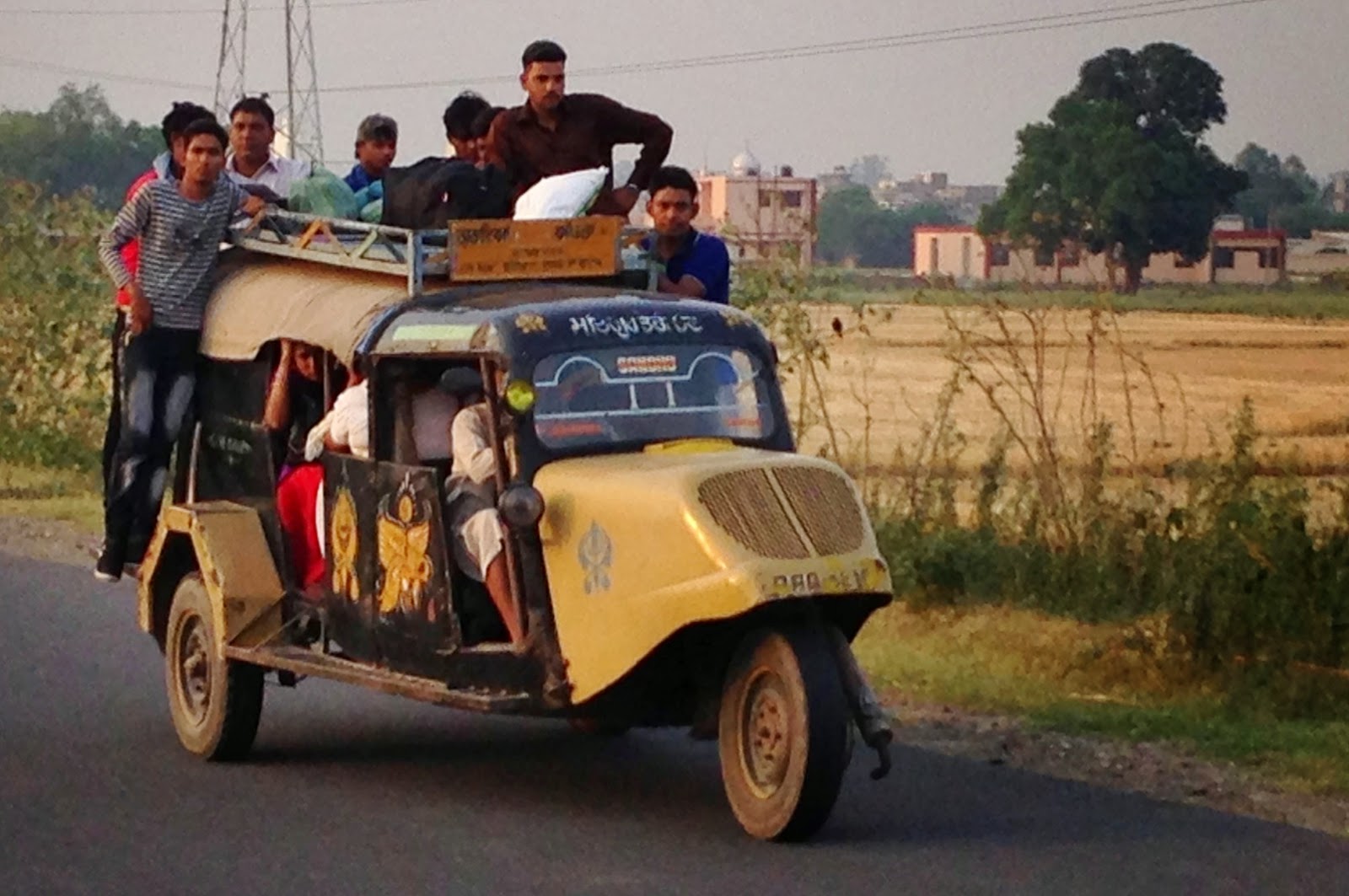
I was 10 and had not seen this "must see" event till then and the curiosity was building every year with parents promising us to take to Indore . From Betma whoever could go to Indore, went, and returned the next morning. All the buses that plied on that route as well as some "tempos", (a large three wheeler passenger vehicle that had a capacity to carry 10 people but often would have 40 or more people on such occasions, would be packed to the brim. 


That year a few weeks before the ganesh chaturdashi day, I had overheard some older friends planning to go to Indore to see the jhanki, this was the time to quench the curiosity that was building up since many years. So, I told one group that I will also join them, no one knew at home what was going on on my mind and these friends who had planned this visit, did not want to take any additional responsibility but they didn't say so. Come the day and I was home and saw this group moving towards bus stand that's when I realised they may be planning to ditch me. I wasn't even ready.. I quickly dressed up and ran towards the bus stand but that may have taken 10 minutes or so and I saw them boarding a bus, from a distance, that was ready to head in Indore's direction. Seeing me I suppose they told driver to move immediately and before I could reach the door to enter, the bus had started moving with the speed I couldn't catch. I saw my friends in the bus and shouted at them asking them to stop the bus to take me.. but they obviously had other plans and gestured at me as if it is the bus conductor who has taken off and they can do nothing about it. I ran and ran after the bus hoping it to stop someplace to allow me to board. I must have run for over 2 kilometers till the next village but by then I couldn't see them. 
Angry and crying profusely and also exhausted with my sprint run, I sat down.. it was still daylight just about 3.00pm or so. After a while dejected, I started walking home taking my shattered dreams with me to fulfil next year.  

Pictures downloaded from Internet public domain.