Saturday, February 13, 2021

Shradh Paksh - Betma days

Two days after Anant Chatursashi another festivity starts for a fortnight this is called Shradh Paksh from a day after full moon until the new moon day. It is considered auspicious for remembering your ancestors who departed and to get their blessings. You celebrate or observe the day of their departure as per Hindu day called tithi that falls between 1st and 15th, the new moon cycle (krishna paksh). It is believed that when you remember your ancestors these days and pray for them and offer food and seek blessings of brahmins and also offer food to crows who take the food directly to your ancestors in the heaven and you are blessed. Since there are only 15 days in the calendar it is ensured that your ancestors must have departed on one of those days, you may not, however, remember the exact day of many of your ancestors beyond one or two generations so you pray for all the undated departed ancestors on day 15, the new moon day, also called Sarvpitr amavasya. That's the grand finale of the fortnight when you pray for everyone in your ancestry. You do not start any new work till everyone of your ancestors has blessed you, so you won't buy or start any new venture during this fortnight and do the same a day after, in the next fortnight with vengeance for all your accumulated desires that you have been holding for two weeks and there starts another series of festivities to begin with navratri ( 9 nights of praying Durga with her various names like Kali, Annapurna etc.).

Coming back to Shradh Paksh, Brahmins would suddenly become far and few in those days as everyone in Betma would seek their blessings by offering food during these days. All three of us brothers would get invitations in advance for giving "blessings" to our jajmaans (host). Usually, all three of us will go to the same houses but on "popular days" when too many ancestors have departed or on Sarvpitr amavasya we would go separately. Those days and even now in villages the houses were built based on the communities so you would have a Rajput mohalla, a kaachhi mohalla, different harijan ( in those days they were called by a different name which is now termed illegal) mohalla etc. etc. Others would be spread across the village. There were a bunch of Bania families in our neighborhood and we would get "booked" for different dates to "bless" them by accepting invitations. Except on the days when we would seek blessings of our own ancestors those days lunch will be prepared only for grandpa/ baa, (In Maharashtra, MP and other Hindi speaking belt Ba or Baa is a term used to address elderly male, usually grandfathers with respect, however, in gujarati culture baa is used for mothers and grandmothers), parents and my sister as traditionally girls were not considered for seeking blessings. It was a big fortnight long food festivals. The usual preparation those days would be halwa, poorie, kheer, raita, papad and some seasonal vegetables. We would get formal invitation and a reminder in the morning and would have a proper and long bath and dress up for the occasion and leave home to bless the families of our jajmaans. We would be offered a clean dhurrie to sit on the floor and a four inch high patla/chowki (a stool) where a large brass thali( plate) would be placed with two or three katoris (bowls) along with a brass glass of drinking water. As such the whole host family would gather around and pray with folded hands and request us to have our food but since all fifteen days they can't shut their shops so sometime they would take turns and male members would just show their faces and go back to attend to their shops ( most of our hosts had either a grocery or a grain shop (आ ढ त की दुकान). Although we were kids but growing up kids eat as much as adults and specially if these are meals in a Bania household and that too special ones for the occasion, you would start eating only after you have taken a small portion of every offering and place it in one corner and took some water in your palm and put it around your plate as an anjali , that is a prayer to God whom you offer the food, prayed lord , before you start eating. The feast would go on for half an hour, and the last of the house and other ladies would not let you finish till you are full to the brink of bursting and almost overflowing with the food and burped. You will be offered a hand wash while you are still sitting and a clean towel be given to wash hands and mouth. Once finished the host will put a tilak on your forehead and offer you a rupee coin as dakshina. A rupee was lot of money in mid sixties that could fetch you an equivalent to 20 "amma-ke-bade" or more. More than the food we would look forward to this happiest ending. As we never got any pocket money ( we were told that we don't need any money on us and all our "needs and demands" will get fulfilled when asked for, the fact was that, that never happened). We felt like VIPs in those fifteen days.

This trend reduced a lot as we reached our adolescent age and later also when we moved to a large city Indore, where we knew only few people who were  far and spread across the city. However, I had couple of Bania friends in my class in the final year of school and their families would insist on following the same, so the feasting continued for some more years.

Oh! How much I miss those feasts and godly importance of having born in a brahmin family.

(Representative picture downloaded from Internet).

Tuesday, February 9, 2021

Sanawda - a small village

Sanawda was a tiny village in Betma's neighbourhood, I have no idea how small but in those days I had not seen a village smaller than this. May not have more than 100 houses with no other government institution other than a primary school. That had just one teacher and perhaps 40 or 50 students comprising of all classes from 1st to 5th. My father was transferred from another village called Kanvan that was nearly 50 kilometers from Betma. He sought this transfer to attend to his father who had retired from the Holkar State service some 20 years back and used to live all alone since Dadi, like my Nani, lived in god's abode. None of us, me and my siblings, her grandchildren saw them. I am sure it must have been tough for Dadaji to live alone since Dadi departed. When father for transferred to Sanawda, Dadaji must have reached 75 but he was hale and hearty and used to manage his own chores. However, I don't remember us spending much time with him before we moved to Betma the nearest "connected" village from Sanawda with some basic facilities for transport, civil dispensary, police station, higher secondary school, shops for daily needs, cloth merchants, pharmacy, jewelers etc., reason being whenever we had long vacations we would go to Nani's. Bua and her children may have been coming to live with Dadaji during summer vacation but our cousins and his grandchildren were much older than us so I suppose they also may have stopped coming there few years back.

When we moved to Betma in 1964, there was no electricity in the village, it had been sanctioned and work was in progress to install street lights and some well to do people were preparing to wire up their houses to get connections when the wires got energised, that must have happened in the year that followed. When the rush was over we also got our connection in the house and were very excited and thanked Thomas Alva Edison ( though name to this godly person was known to me much later). Ghamu Da was quite enterprising and seeing the opportunity he trained himself as to how to do wiring and used to wire up houses with the help of Damu and some other people he kept on temporary rolls. There were two types of wiring, one was open and another was concealed. In the close wiring you would use an inch wide wooden cover and hide the wires beneath, it that had another wooden piece of the same width nailed to the wall. The open wiring had half an inch wide single piece of wood and wires would be placed on it using metal clips. I knew all this because like helping them sell tea and cold drinks at bus stand I also used to watch them do wiring installation work and give them nails, wires etc. when they stood on stools or ladders to fix wooden strips that would conceal or just be a base for wires.

Till mid -1966 we used to study under the lalten ( lantern) that consumed kerosene that was called ghaslet then, like you see in the old Hindi movies. We couldn't go out and sit under street lamps as also shown in those movies since there were no electrified street lamps and I don't remember any kind of street lamps lit by any alternative mode at all in the village. One could barely see while walking on the roads after it got dark by using a torch or often a lalten. Should you have neither you need to be careful and make do with little light coming from people's homes. By then I had graduated from primary school and had joined or would be joining the middle school that was on the main highway just before the bus stand, unlike the primary that was in the heart of the village.

Those days a teacher in villages was literally worshiped unlike how we see them today. A school teacher called Maad sa'ab( crude/corrupted word for Master sa'ab). Smaller the village lesser you found educated people who could even read or write and generally you would find the children studying in schools are the first generation learners. So maad sa'ab would do many things besides  just teaching.. like reading the letters received or writing the letters they wanted to send. People will look up to maad sa'ab for getting current affairs news of kasba, tehsil, district, state and the world. Maad sa'ab would also be teaching them moral values and unless you are a crooked person you would listen to him intently and follow what he said. Maad sa'ab's family would also be kept in high esteem and people would jump at any opportunity to host them. 

Those were the days when father didn't even have a bicycle and would walk some 1 to 1 1/2 Kos ( 3-4 Kms) each way to  school. A Kos was a unit of distance that was equal to 2 miles. There was no motorable road from Betma to Sanawda and the only relief to your feet at times was when a bullock cart was going your way. In monsoon the road will be muddy and under the water at times cutting off the destination and villages on the way. So during monsoon half the time the school would be closed or when in school, father would stay with someone in the village if it was impossible to walk back. During the harvesting season be it in winters when it was time for rabi crops like wheat or chana or the summer crop like maize, jowar, baajra etc. Sugarcane is one crop that would come in any season.. it is sown in three seasons and it takes nearly 18 months, so people used to sow it in different seasons but in those days we saw the crop maturing during monsoon, same time as maize and jawar. We never saw soya or even paddy.. soya was a new word in the country ( at least for me). Malwa was not right place for paddy.. first time I saw paddy field may have been in my twenties or so. Malwa is also known to be very fertile with its black soil. For our entire childhood we didn't know of any other colour of soil and only other soil we used to see was a  beige colour soil that was used for washing hair before mother (and other women) applied amla sikakai. There was no concept of what we call shampoo now. We would be treated with fresh crop produce in the fields be it green wheat (umbi) or green gram (chhod) in winters and makka (maize) bhuttas freshly roasted over dried branches available in the field. It used to so tasty and the process especially that of removing jawar pearls from the bhutta/cob was fascinating. 

Sugarcane/eikh/ganna was also grown in abundance in between the fields that had maize or jawar during monsoon crop. Since there was no sugar-mill in the vicinity most sugarcane growers would use sugarcane juice to make gur ( jaggery). This process was also very fascinating. You would take out juice of sugarcane using a small crusher that would be rotated using oxen sometimes one and some other two. During the season, at least two or three times we would be invited by locals in Sanawda who treated us to start with fresh sugarcane juice filtered and enhanced in the taste by squeezing lemon juice over it. While you drink this, you will be served freshly roasted maize cobs (makke ka bhutta)/ or jowar pearls. Before you finish that, freshly made hot gur/ jaggery will be served to you on a leaf. Gur is made by boiling sugarcane juice in a huge flat metal vessel, it takes 3-4 hours for juice to solidify to become gur and you have to constantly stir the vessel and mix some additives that removes impurity that is taken out constantly. The taste of fresh gur is just wow! something out of this world. As urban dweller it is difficult for you to imagine that until you taste it. 

On one monsoon day when it appeared it won't rain three of us and father walked to Sanawda to be guest of the village head in his farm. We were full to the head and enjoyed ourselves thoroughly with all the savories ( roasted stuff, juice and fresh gur) that it was difficult for us to even get up and walk. When we were leaving for home we were also given a small vessel full of sugarcane juice, besides fresh gur and bhuttas to be taken home for further consumption, especially to have sweet rice cooked in the juice, a delicacy. 

We must have left the village around 4.00pm and started walking home.. half way home it started raining with thunders and then pouring with such intensity that the small metalled/ gravel road was full of water and mud flowing at the bottom and soon the water level was nearly 3 feet as there was nowhere water could flow but on the road. I must have been little over 4 feet at that time. All of us were also carrying something or other given to us by our host and I had the juice in a container carried on my head.  It was tough walking the road and it was getting dark, somehow we reached home and when I handed the juice over to mother for making sugarcane juice rice, she couldn't believe that on such a rainy day, I managed to get it safe.
 Reprentatice pictures downloaded from Internet.

Sunday, February 7, 2021

Anant Chaudas Ki Jhanki


In our childhood schools used to open on July 1st after two months long vacation. As such we didn't have classes after March since April was the month of exams which would invariably get over by middle of the month so as such it was a three month long holiday but since parents had to worry about the results which was the yardstick of your performance through the year and results would be declared on April 30th, the official vacation time was only two months and not three.

Of those two months at least one and half would be spent in nani's house in Dewas and reluctantly we will be back about a week before reopening of the school. That would also mark end of summer as monsoon rains would start in Malwa towards the last week of June. Weather would turn from pleasant to very pleasant although as kids we would never mind any weather. However, sadly the time for aamras, that was part of all our summer meals would be over by then. July would also offer excitement of new class and give feeling of growing up by sitting in a class higher than when schools had shut two months back.  Sometimes there will new faces also joining the class and meeting new friends would have its own excitement. Some teachers would also be new in the new class and we always hoped that they would not be strict and will be good to us. You will have to impress them again to have impression of a good student. Although it was not common but not rare as well when you are asked to leave the class and stand outside.. don't know whether it would be called standing or sitting but the pose you were asked to keep was that of a "murga", right at the entry door of the classroom for the whole class to see.. it would be big distraction for the students sitting in the class that teacher would not notice as all the students will be looking at me and someone else, if I had the luxury of a company in that pose, rather than the blackboard.  As such I was a sincere student and would get punished by someone else's mischief. In the hindsight I think that was a practice that made me do yoga without any pain in later life. 

Savan /Shravan is the month when monsoon will be at its peak and it would usually start in middle of July. Mondays of the month had their own religious importance that we hardly cared but every Savan Monday was a picnic day. There would be four and sometimes five Mondays in Savan ( सावन सोमवार). On these Mondays mother, me, our friends and their mothers would go out to Balaji temple on the outskirts of the village on a potluck picnic. While mothers did Puja in the temple we would be swinging on the rope/ rassi-jhulas that were tied over several pipal and bad (बड़)/banyan trees. Next to the temple was a rivulet that would be flowing with full water during monsoon and when it rained heavy, it would get flooded and the road would go under giving a visual pleasure to villagers ( although commuters will be cursing).. it would be like a Mela in those days when the rivulet overflowed. That phenomenon was called (puer/पूर or flooding). We didn't care whether it rained or not out picnics were always "on" on Savan Somwaars. I am not sure but I think this used to happen outside the school timings or I won't be surprised if we were given short leaves from schools. This was like continuation of our holiday/joy season.


Between July till March, that is almost the full time that school was in session we have one festival or other in India. Rarely a week will pass when there is no festival that we celebrated. Savan will culminate into rakhee and eight days later there would be janamashtmi, 12 days after that would be Ganesh Chaturthi and 10 days later there will Ganapati Visarjan ( Anant Chatursashi/chaudas) and so on and so forth until mid to end March with Holi. From Ganesh Chaturthi to Anant Chatursashi/chaudas all 10 days is a big Ganesh festival across the country especially in Maharashtra and western Madhya Pradesh. ( In those days outside these two states the fervour was not such in other states, thanks to Bollywood that glamourised these festivities and now entire country celebrates these festivals with similar enthusiasm). 

Indian freedom fighter Bal Gangadhar Tilak championed this large scale Ganesh utsav as a means to circumvent the colonial British government ban on Hindu gatherings through its anti-public assembly legislation in 1892. Since then the 10 day festivity culminating into a big procession running through the city marked the end of the festival. Pune was the first city to have these huge processions with tableaus on relevant topics mounted on large vehicles.

Indore adopted this in time immemorial, soon after Pune and no one told me when, but ever since I was remember I had heard about these processions in Indore. Indore was one of the main textile centres of the country. I think it had largest number of textile mills after Ahmedabad and Bombay, unlike Pune that had no textile mill worth mentioning. Every textile mill had its tableaus in these processions and each mill will have about a dozen or more exhibit mounted on different vehicles. Each one will be on some theme or other that would be a message on current social or political subject or statues of several gods and goddesses including Lord Ganesha whose idol will be immersed next morning with loud chants "ganapati bappa moriya" (oh lord! we worship you as our father) in some localities people would add "pudhachya varshi laukar ya" (come soon again next year). The whole city will turn into an exhibition ground and people will queue up on both sides of the route and also on the windows and terraces from 4.00pm onwards that would be not less than 10 kilometer long from start to finish, although the first jhanki/ tableau of Hukumchand Mills will come to Jail Road not earlier than 10.00pm and the last one of Swadeshi Mills between 4.00am and 5.00am depending on how smoothly the procession went. Ahead of every set of tableau there would be a team of dancers, some with lejhims and some other with different kind of bells, dhols and other musical instruments. They will stop at every 300-400 meters and gyrate with full energy. This will allow people to enjoy not just their dances but also look at the tableaus closely.  Entire route will be barricaded with ropes and volunteers of different mohalla committees will be monitoring the discipline of the crowd. This will also be chance for mobile vendors to sell various wares not just food. There would also be some food stalls and other souvenirs in by-lanes. Overall this was a huge festival for Indore city where people would come not just from the city but from nearby villages and towns as far as 60-100 Kilometers with their families especially small children. Usually this day would come in September sometime in the beginning and in some others a bit later in the month depending on hindu calendar. Besides Pune and Indore the only other major city where the entire city would celebrate this immersion is Bombay (now Mumbai). One could always debate whether it started first in Indore or in Bombay to celebrate at such large scale. But Bombay till date doesn't have the tableau procession on this day.. they just have large statues from various festival committees usually crowding around Chaupati where often the crowd will be unmanageable and stampedes would cause accidents, some fatal, every year.


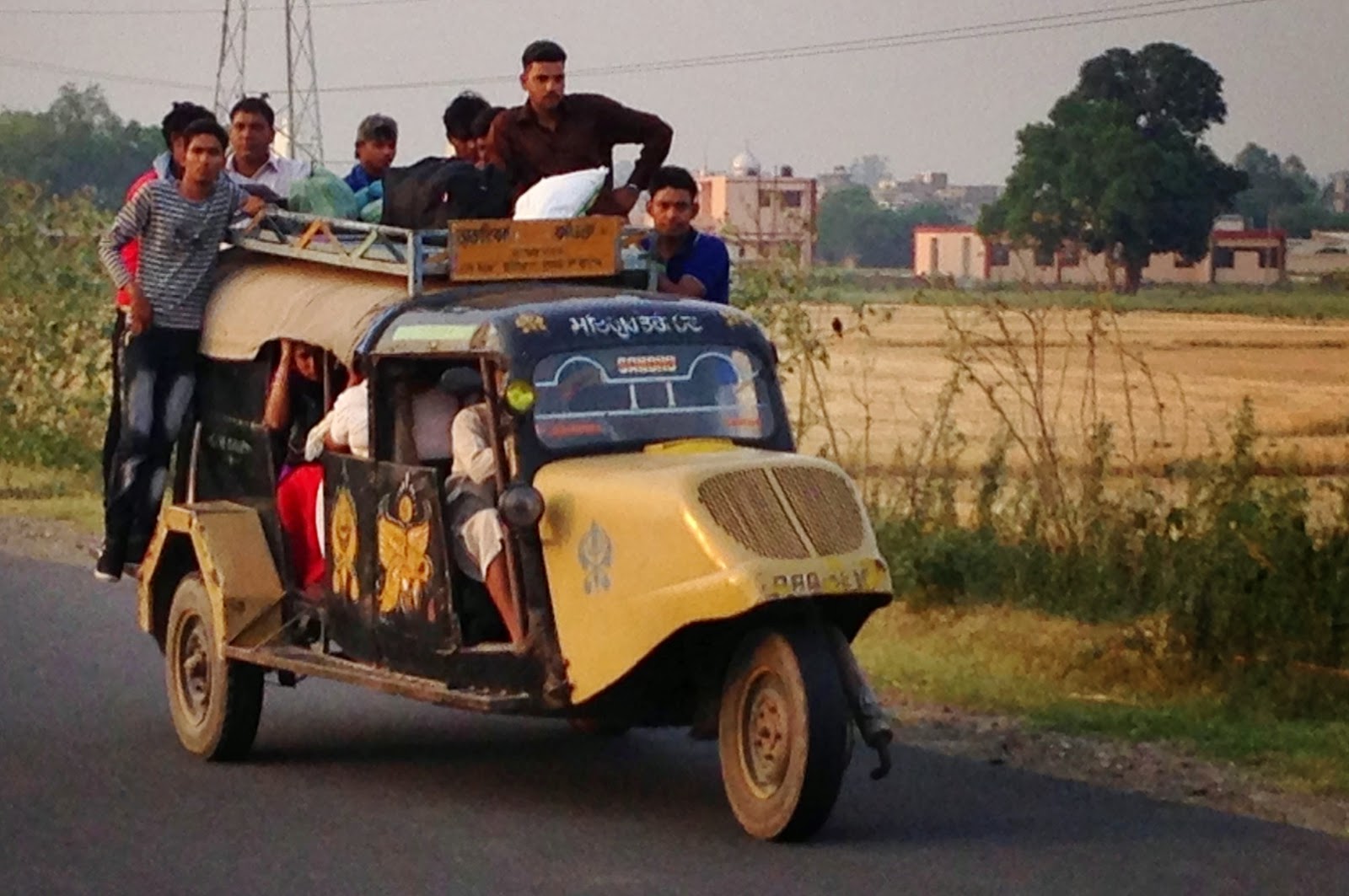
I was 10 and had not seen this "must see" event till then and the curiosity was building every year with parents promising us to take to Indore . From Betma whoever could go to Indore, went, and returned the next morning. All the buses that plied on that route as well as some "tempos", (a large three wheeler passenger vehicle that had a capacity to carry 10 people but often would have 40 or more people on such occasions, would be packed to the brim. 


That year a few weeks before the ganesh chaturdashi day, I had overheard some older friends planning to go to Indore to see the jhanki, this was the time to quench the curiosity that was building up since many years. So, I told one group that I will also join them, no one knew at home what was going on on my mind and these friends who had planned this visit, did not want to take any additional responsibility but they didn't say so. Come the day and I was home and saw this group moving towards bus stand that's when I realised they may be planning to ditch me. I wasn't even ready.. I quickly dressed up and ran towards the bus stand but that may have taken 10 minutes or so and I saw them boarding a bus, from a distance, that was ready to head in Indore's direction. Seeing me I suppose they told driver to move immediately and before I could reach the door to enter, the bus had started moving with the speed I couldn't catch. I saw my friends in the bus and shouted at them asking them to stop the bus to take me.. but they obviously had other plans and gestured at me as if it is the bus conductor who has taken off and they can do nothing about it. I ran and ran after the bus hoping it to stop someplace to allow me to board. I must have run for over 2 kilometers till the next village but by then I couldn't see them. 
Angry and crying profusely and also exhausted with my sprint run, I sat down.. it was still daylight just about 3.00pm or so. After a while dejected, I started walking home taking my shattered dreams with me to fulfil next year.  

Pictures downloaded from Internet public domain.

Saturday, February 6, 2021

Dara Singh - the wrestler.

As an urban dweller it is difficult to imagine and understand life in a village especially what it used to be in the sixties of twentieth century. 

When we shifted to Betma in 1964 within six months or less I had made a range of friends of all ages: my age and about 10-15 years older. Damu was short for Damodar who had fascinated me most from our first meeting when instead of getting angry and bashing me up he gave me a fair deal when I dwindled his pocket money and mine too in the process. We were soon introduced to the whole family. Amongst his older brothers was Ghmau Da, who must have been 8 or 10 years older than me and was very entrepreneurial. Both Damu and Ghamu da used to assist Bansi da and Murali Da at the tea stall at the bus stand generally in serving tea to customers but at times in making tea also. Bansi da and Murli da were much older and very quiet so sometimes out of fear and some others out of respect I hardly used to strike any conversation as it was difficult to pick a subject to converse on, they both including Ghamu da dropped out of school quite early.. I wonder if they studied beyond primary. This was Kumrawat family who are traditionally in paan/beetle leaf business (Chaurasias). Damu also had two sisters an elder sister and a younger one and a younger brother who may have been two or three years younger but was treated too young to move around with us, he nevertheless would.
Like other panwaris in Betma, Damu's also had a small patch of land next to the small river that flowed most of the year outside the village where they used to grow paans. This was very special farming like grapes and required big skills to get good results. You would first make arbour by planting sticks that would be about 7 or 8 feet high and make a roof over them mostly of bamboo sticks. That provided shade and allowed the paan plants to move up alongside and then on the inner side of the roof. You also make beds like flower beds for water to run through and uniformly provide water to all the plants. Each crop would take between 6-8 months and in summer months would dry up unless watered. This farming would be done near the river on the riverbed as there would be a constant source of water that is needed in high quantity. Unlike these days, there were no diesel or electricity pumps and water would be drawn by other means. This was a very hard life and even the small piece of land consumed labour of the entire family. Their parents, mostly father, sisters and at least two of the five brothers would be there from morning through evening to ensure proper water supply, sorting good and bad paan leaves and carrying them home or directly to paan shops that sold the paans to end consumers. In India paan chewing is a way of life like breathing for many. Malwi paan ( grown in the Malwa region) stood apart in taste and quality from other varieties and was patronised by connoisseurs who would pay higher price for those long leaves and sweet taste, unlike many other variety that is bitter.
Damu's father had a small kiosk in the tea stall where all the brothers and father sometime would make paan for customers but it was folded long before, as it was too much to look after. Often times I would also go to panwari outside the school time and would enjoy doing titbits in the farm. Next to farm was also a ghat where ladies and girls who assisted their mothers would come to wash clothes. Some would also bathe their cows and buffaloes. I was too young to have any attraction for them, so don't recollect if I was fascinated with the activities at the ghat. The area was like mini forest and there were large number of fruity trees of tamarind, mangoes, bananas, ber (jujube), khajoor (desi dates) etc. that were free for all.. sometimes we would also climb on the trees to get them or to simply sit there and relax.
Damu and Ghamu da were also keen wrestlers and would be regular at the only akhara in the village on the extreme corner of the village on the other side of bus stand where most wrestlers and those interested in body building would turn up, do warming up exercises like push-ups, sit-ups, swing mugdar (a dumbbell, or more like a gada) and over the malkhamb. They introduced me to akhara where I became regular at an age as young as 9. Akharas head was one Amarsingh pehlwan who was otherwise a gwala having over a dozen buffaloes. But Mornings and evening he would spend a lot of time in akhara. He had a body that could crush people and his wrestling technique was so good that he remained unbeaten in most competition in the area. His daily diet of milk was enormous an unbelievable 10 litres+. He was a very soft spoken and friendly person with wonderful body and handsome face. In my later years Puneet Issar who played Duryodhan in BR Chopra's Mahabharat reminded me of my ustad Amarsingh pehlwan. Akhara gave an entire different dimension to my existence then. I too would be going there every morning and evening and will look forward to spending time there. 

It is difficult for myself to believe that gradually I was doing over 500 sit-ups and 300 push-ups. Besides occasionally exercising with mugdhar and malkhamb. In the process would sweat so heavily as if we were out in open on a thundery monsoon day.. drenched from top to bottom. My routine there involved smartly dressing up like young pehlwan.. we will remove clothes in a way that you would never be completely undressed and have a "langot" tied that covers your area that needs to be protected. My mother who was learning stitching in a "tailoring school" those days would stitch those as part of her homework but they were smart by any standard.
Wresting was indeed fascinating. Ustad ji would often tell us stories of his wresting competitions and we would be dumbfounded with them appreciating his skills and bravery and I would often imagine to be like him when I grow up. Since we didn't spent much time together between "jai siya ram"s that was our war cry while entering and exiting akhara, Ghamu da would tell many untold stories about ustad ji's various wrestling expeditions. Some people would also talk about Gama Pehlwan who died some 10 years back and was a charismatic free style globally unbeaten wrestler who was awarded "rustam-e-hind".  For lovers of the game it was a big loss although Gama Pehlwan had moved borders and used to live in Lahore after partition.

Dara Singh was the ultimate name in wresting world those days before he entered the film world ( it was not called Bollywood then). As the stories go,  which are quite believable, he was the unbeaten wrestling champion of "free style" in the world. He would first offer his brother Randhawa to anyone who challenged him and he would come into the arena only when Randhawa lost. As far as his own technique was concerned, he would take beatings from the opponent in intimal rounds to make it appear that he is a weak opponent and suddenly in third round he will turn around and will put down his opponent who will often turn up in a hospital. 

It was June1969 when Dara Singh had announced a global challenge to anyone in wresting in Indore's wrestling stadium. One Majid Akkara took the challenge and the dates for bout were announced. All tickets were sold in minutes after it opened for sell/distribution. Come the date and anyone who was not even interested in wrestling was also anxiously waiting for Dara Singh to "show stars" to Majid Akkara. Newspaper headlines will remain focused on the event weeks in advance. The same day there was a procession in the evening celebrating the "coronation" of Master Chandgiram as Bharat Kesari. When his procession was passing through Bambai Bazaar some people who were expecting another pehlwan to win the title started throwing stones on the procession that eventually lead to the first ever communal riots in Indore that always lived peacefully even in the testing times like partition of the country. The situation suddenly started worsening very fast so much so that authorities immediately clamped curfew in Indore and the Dara Singh - Majid Akkara bout had to be abandoned much to the disappointment of fans and spectators.

Dara Singh and his troupe was rushed out of the city around 1.30am and the first stop they had, to breathe properly and understand what had happened, was the bus stand in Betma where the only tea stall that was open was manned by Bansi da. When he saw Dara Singh asking for tea, he almost fell down and imagined it to be a dream and not a reality. Instead of making tea he suddenly rushed out and told people to call Ghamu da to meet him. Eventually within 10 minutes hundreds managed to reach bus stand to have Dara Singh's darshan who had tea, waved at people and rushed out to save himself from fans.

Next day when I got to know of the news I was in complete awe and looked at Bansi da as if I was looking at Dara Singh himself.

#betmastories
#darasingh
#freestylewrestling

Fair Deal.

Betma is a small hamlet some 14 miles from the heart of the capital of Holkar state, Indore. Those were the days when the erstwhile kings and queens still had lot of entitlement promised to them by Sardar Vallabh Bhai Patel when he got them to sign the certificate of accession with the union of India and it was before Indira Gandhi had removed final feather in their caps, the privy purses and brought them equal to common man. Well not really, if you look at the life of the former Rajas and Maharajas they still behave somewhat in that fashion and either command respect or demand so when you deal with them. Just a day before in parliament when Jyotiraditya Scindia who recently moved over and shifted his place in the parliament, was speaking to another leader in the house addressed him as Maharaj, in jest or otherwise but he didn't feel awkward. Same way the road named after his father is still called Shimant Madhav Rao Scindia Marg.

Betma may have had some 1000 houses in those days with the population of under 5000 people. It was called a kasba, that is a bigger than a village and smaller than a tehsil, there was a weekly bazaar for locals and also for people living in nearby villages to do their weekly and sometimes monthly household stuff shopping of, spices, clothes etc etc. Like villages those days, there was a main road where most of the shops were located like grocery, pharmacy, tailors, barbers, pawn brokers, cloth merchants, utensil shops, veterinary clinic, doctors, dyers, it also had girls primary school, post office, etc. Rest of the village had only smaller shops catering to daily needs of neighborhood. Bus stand was not very far and was the main entry to the village from a highway passing through and connecting Indore to other cities like Ratlam, that would then enter Rajasthan near Chittorgarh and Jhabua that would further go to Godhra and Ahmedabad in Gujarat.

Coming from Indore before you entered the village was a gurdwara where Nanak dev ji had come and stayed for six months during his world tour. So the village also has a holy significance. Little further when the village boundary started, was a government middle and higher secondary school founded in early last century around the time when the first world war broke out.

Most of the buses plying on the route on highway would stop at the bus stand that was the most happening place in the village with several eateries, chai shops, a civil dispensary and a police station. It also had an आरा मशीन ( a wood cutting factory with a giant machine to slice tree trunks into smaller pieces used in construction of houses as well as used in making bullock carts etc. 

Bus stand area was also frequented by people young school dropouts, idlers and their likes who had nothing else to do.. they will sit around and watch buses coming and going while they sat in a corner and played cards as part of their gambling routine. Amongst the eateries was one famous shop "Amma ke bade". Apparently Amma didn't have anyone in the family and used to run this small eatery assisted by one or two small boys, making just "aloo bada".. it was different in shape and taste and cheaper than other places, I think a bada would cost 3 paisa in those days and there would be a queue in front of her shop. Many a times a bus would stop there only for a few minutes just enough for passengers to have tea or a cold drink sitting in the bus. One of my friends' family used to have a tea shop with enough space for 3 or 4  people to sit where most of the business would happen by serving tea to people who stood in front of the tea stall. In the mornings you would also get poha there. One will pay 3 paisa for normal tea and 5 for special tea. Normal tea would be prepared with half water and half milk and special will be with full milk. There was a time when after school I would go to bus stand and help my friend in selling Gold Spot, Fanta, Rimzim and other cold drinks in the buses.

When we moved to Betma I joined class 4 in primary school which was next to kachehary (a local court cum Gram Panchayat office) in the middle of the village and on a mound that may have been as high as a flyover but back then it appeared as if we were climbing a hill. 

One day a couple of months after we moved, I was playing with some friends outside the house that was the main bazar called "poora" bazaar aka "bada" bazar that used to be crowded on weekly bazar days and empty on other, with barely few people crossing the road on foot or on bicycle. There were practically no motorised vehicles, once or twice a bullock cart will pass. My friends and I were playing a game called "pitthu" with a cotton-filled ball made by me with cotton chindi (rugs, cloth scrap from tailoring shop) into small peace of cloth and stitching it using a needle.  I had become an expert in that so much that I would sell it for one or two paisa. While playing a shot over the stone heap the ball bounced and hit a passer-by who was carrying a small wire-framed-cage tray that had 6 small glasses filled with milk for some customer. ( Same fellow who later became my friend, whose family was running a tea stall at bus stand). That ball hit the tray and there went all the glasses and milk, nothing was left of it, everything went flying here and there. I was so shocked and gripped with fear of what would be coming next.. there was no where to run and hide to, I didn't even made an attempt. Next I heard from the person " I lost all I had, milk and glasses, you either pay for the glasses or for the milk", I was stunned as to how could a person be so reasonable without even negotiating for the damages. However, I agreed to pay for the glasses that amounted to some 15 paisa and asked for a month to pay back.. that I did by selling the cotton balls that I dexterously made and saved my skin. 

It was indeed a fair deal.. isn't it?

Pic courtesy internet ( hualong motor company website).


#betmastories

#betma


Friday, February 5, 2021

Thank you German.

It was the year 1980 and I had taken up a job with a multinational in Pune (then called Poona). After living in Bombay (now called Mumbai) for a couple of years and finding it fascinating as culturally it didn't belong to the rest of the country in those days. As aptly named Financial Capital of the country in those days Bombay was more like any western country where business meant business unlike the rest of the country where business meant "chalta hai", closely resembled Singapore as that in one place that was similar to where Bombay was just 15 years back and it was moving ahead and had matched any developed country in the world. Just to give you an idea of prosperity and the monetary progress of the city, the city provided 1/3rd of the taxes to the exchequer. Bombay was fast catching that progress Singapore had gone through. The ethos of the place was no nonsense, professional, committed, non interfering, unassuming. Anyone who was coming to the city was mesmerised by these characteristics and unless s/he wanted to be complete dud fell in love with the place. It offered a life that no other Indian city, then, offered. It was a land of opportunity, where if you had skills and luck helped you had a chance to make a meaningful life... even if not, you still made a life and a living in the city that was so supportive to everyone and embraced people with open arms.

Well, Pune was quite different from Bombay in the late seventies. It was a regional, parochial and not a metropolitan city. Unlike Bombay where people spoke different languages and had a mix of cultural not just from different parts of the country but also internationally too. Many were vocal in comparing it to NYC and I will completely agree with them. Living in Bombay I managed to learn the local languages both Marathi and Gujarati only to the extent to communicate with people who didn't understand either Hindi or English, but there were few such people in Bombay. I had also to accelerate my basic language skills in both these languages as majority of people there didn't understand that with the surname like JOSHI I am neither. A vast majority of locals who were either Marathi or Gujarati whom I used deal either personally or professionally would insist that I didn't know who I was and perhaps, forgotten my roots being away from Maharashtra. Well, in Pune this problem hit me 100 times more, no one will speak to me in the languages I was comfortable with with this notion, even in the office of the multinational that was at a project stage and most people around were locals barring a few who came largely from Bombay. In just about six months or less with this "pressure" to communicate with people, I learn fairly good amount of Marathi to not feel embarrassed. But this story is of the time before that stage.

One of the few international institutes besides multinationals like Philips, Atlas Copco, Widia Tools, Sandvik, Alfa Laval, Ingersoll Rand etc. in Pune was "Goethe Institut" Max Muller Bhavan on the Boat Club Road, as the name suggest there was a boat club in vicinity and the institute was on the banks of Mula Mutha river. This was the headquarter of this German language teaching institute in the country and the only one that ran advanced German courses, leading to equivalent to Masters in German and further specialised courses like teaching German. One of my friends Nitin had done his basic courses in German in Bombay and was aspiring to learn more so although he had a professional degree in naval architecture and was working as one he decides to take short time off to compare a course there around the same time I came to Pune. I only had a handful of friends either from my college days who were working in Pune and some introduced to me by a colleague and a friend from Bombay. He decide that I should stay with his college friends on Prabhat Road ( a posh locality mainly habitat by artists and literary people of repute) till I find my own accommodation in the city. Eventually, in a couple of weeks Nitin helped me in securing me a PG accommodation with Khandelwals who lived in the apartment block of the other side of the river Mula Mutha. But that's another long story I will talk about some other time

After being in Pune just for a week or two, I was to visit Bombay office and so I went to Pune Railway station to catch an evening train... I presume. it was the prestigious Deccan Express one of the two glorified connecting Pune to Bombay, the even more prestigious and faster train was Deccan Queen, that would only run from Pune in the morning and return in the evening. I reached station15 minutes before the departure time and weather being pleasant in October, was strolling on the platform while I waited. Suddenly, I noticed two people, just about my age, speaking a language that was alien to me. I started listening with some attention and putting two and two together I went and asked are they conversing in German. Both looked little uncomfortable with the intrusion and with a smile together said, yes why? I said no I just thought so since it appeared foreign and there is an institute of language here where I have a friend. The obvious question was "who".. again both said together, Nitin was my answer. They both knew Nitin since he was doing the same course like them he was also from Bombay. बस फिर क्या था!! By then the train came and we decided to sit together. 3 1/2 hours just went in air and we felt we didn't say anything more than exchanging pleasantries. 


The two gentleman were Chetan and Sujeet who became friends for life and we shared a whole world together and are still sharing.. not just that it opened a whole new world to me and their other linguist friends and friends' friends became my close coterie of friends with whom I spend and share my time and life regularly.

I still remember that journey that was so fulfilling for my life. I have seen people making friends in train journeys who are largely forgotten once you say goodbye at the arriving platform but this 3 1/2hour journey was indeed different.

Pic courtesy punekar.com.

Wednesday, February 3, 2021

Windy Windings.

It was always a fun to be at nani's house. So much attention, so many friends, cousins, uncle and aunts ..all sizes, shapes and ages but usually every one was happy go lucky those days as back then the modern life's tensions that everyone is facing were not there..in general life as relaxed, more so in villages and small towns and everyplace was small only when you look back and ponder. Dewas was a small town a princely state ruled by Maratha king Pawars. Even this small state was divided in two, Senior State ( बड़ी पाती) and Junior State ( छोटी पाती). They must have come in the late seventeenth century along with Holkars, Sindhias and the other Pawars who ruled Dhar, other side of Indore. Due to this "invasion" of Marathas who were sent by Kolhapur rulers as an expansion of their territory came hoards of Marathi speaking people of all casts that usually happens. None of these rulers specially Holkars and Sindhias ( originally Shinde) were upper cast brahmins like Peshwas of Pune, in fact they were not even Marathas like Chhatrapati Shivaji, the fighting community क्षत्रिय). Shindes managed to rule from Gwalior the largest territory of what is Madhya Pradesh today. Holkars had a smaller state from Indore to Omkareshwar and little more to the south. Pawars of Dewas and Pawars of Dhar ( that was once ruled by Raja Bhoj of Parmar dynasty who ruled in the 11th century, who is famous with the phrase that many of us use but I bet most don't know who he was in कहां राजा भोज और कहां गंगू तेली ( where is king Bhoj and where is Gangu Teli ( oil extractor) his subject ..we will talk about them some other time, both managed to rule smaller states almost the size of a district.  I may not know but to the best of my knowledge all the four Maratha rulers never waged a war against one another. So we had a fair percentage of Marathi speaking population patronised by the rulers who always considered themselves superiors to the peasants who were natives. That is one reason why people from Malwa ( the region that these kings ruled ) consider Marathi and Maharashtrian culture as part of their own and flock to Mumbai than to Delhi.

Weather of entire Malwa is so pleasant throughout the year that people find it hard to migrate to other places for climatic reasons. You might have heard the famous word "शब-ए- मालवा", meaning no matter what season it is the nights of Malwa are always pleasant.

Anyway, so I was talking of visiting nani's house in Dewas that had different set of rulers from rural Indore where I lived. Summer vacations there was by default but when we went there to attend some wedding or other of holiday season, the joy would double or triple because .. no schools, every cousin, second even third cousin would be there, variety of food to eat and since elders were busy in making arrangements no one would bother to check what you did. Since Nani was with the god my mother would take charge of the situation as de facto commander. She was quite friendly and an extrovert unlike her elder sister and would always be given more and more responsibilities on such occasions due to her management skills. Her brothers , three of them, were quite young so after Nani's passing she was the motherly person for everyone although she herself was quite young to handle motherly responsibilities.

Weddings those days use to run for weeks not the actual functions but the general preparations. Besides the fun at home many a times the whole extended family would turn up into Mahesh Talkies , the nearest cinema hall to watch a movie once or more every week. Mahesh Talkies was a flat single level theatre with moveable furniture for the front and wooden benches at the back. Since in proper cinema halls expensive seats used to be on the first floor balcony for better viewing, Mahesh Talkies back seats would be called Balcony seats. Since I was young I would be with mother and aunts in the ladies section that was behind the front seats and quite close to the "balcony" seats. Unlike, these days, we neither had money nor anyone would go out of the hall to buy titbits during interval so we were clearly deprived of that bit of extra pleasure.

During one such weddings of our cousin Sita Didi in the late sixties we had all the usual wedding festivity fun and two or three days later when outside guests went back, the close and young people in the family went to "tekri" ( a small hill is called tekri in Hindi especially in Malwa). In those days tekri had only two deities, badi maata and chhoti maata. ( There is an interesting story of these two deities चामुंडा माता and तुलजा भवानी, that we will talk some other time). It was mandatory to visit these temples whenever there was any function in the house to seek maatas' blessings. So out the whole "paltan" ( Hindi name for platoon) of about 10 of us and we marched to tekri on foot. Tekri must be some 200 meters in height and the lower periphery that had temples may have been about a kilometer and a half and there was another layer on the top that would be some 300 meters long and 100 meters wide. We reached the first temple in about half an hour from home and after spending 15-20 minutes went to another temple on the other side of the hill. 

After the "darshan" we all climbed to the top to get the lovely view of the city and beyond. Besides the newly weds we were two couples and some five or six children. As we reached the top the wind suddenly gathered pace and it became difficult even to walk. A few meters and some 10 minutes later as we were enjoying the windy weather there was a shrilling cry and when I moved my head I saw Sita Didi's saree flew away with the wind. Wind was so high that none of us could catch it and get back to her. There no other group on that part of the tekri so she was saved of the embarrassment. I think it was winter and my newest cousin brother-in-law was wearing a coat that he removed and gave a fresh look to Sita Didi.

It has been just about fifty years or so but I often remember this unique incidence and wonder whether I laughed then or cried. 

Pic of Tekri is a stock photo from Internet.